
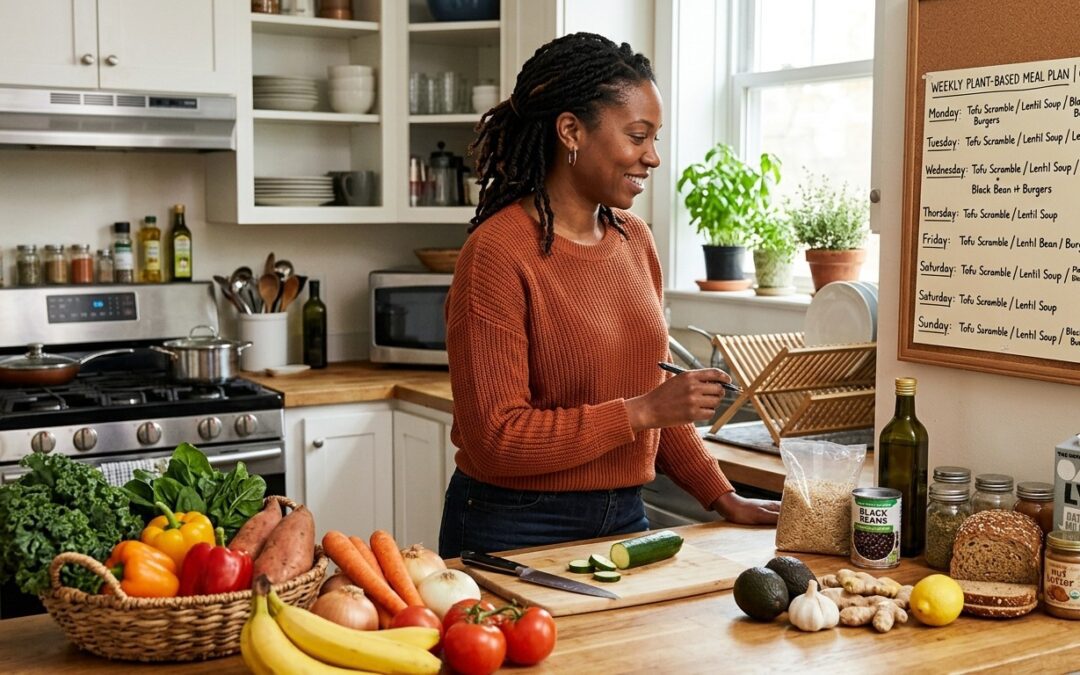
September can make healthy eating feel more complicated than it needs to be.
New routines start. Work gets busier. School schedules change. Summer slows down, and suddenly the calendar feels full again.
And somewhere in the middle of all that, you may start thinking:
I need to get back on track.
Maybe you want to cook more, eat more vegetables, pack better lunches, stop relying on takeout so often, drink more water, or plan your meals.
Those are all reasonable goals.
But here's the problem: when we try to turn September into a complete reset, healthy eating can quickly become another thing we're trying to “get right.”
You don't need that.
Nobody's coming to grade your September.
There is no perfect meal plan, no score for how many home-cooked meals you made, and no report card for whether you followed your routine every single day.
What matters more is building an eating rhythm that works when life is busy, unpredictable, and very normal.
Healthy Eating Doesn't Need to Be Perfect
One of the easiest traps to fall into is thinking that eating well requires consistency at 100 percent.
You prep meals on Sunday, plan every dinner, and buy all the “right” groceries.
Then Wednesday happens.
You work late, your plans change, and you don't feel like cooking, so you grab something quick.
Suddenly, it can feel like the whole week is ruined.
It isn't.
A sustainable eating routine has room for imperfect days.
You might cook three nights one week and four the next. You might eat leftovers for lunch, or you might have a restaurant meal because you were out with friends.
You might make a very simple dinner because that's all you had the energy for.
None of those things mean you've failed.
The goal is not to create a routine that only works when everything goes according to plan.
The goal is to create one that still works when life happens..
Think Rhythm, Not Rules
Rules tend to create pressure, while rhythm creates flexibility.
A rule might sound like: “I have to cook every night.”
A rhythm might sound like: “I usually have a few simple meals I can rely on during the week.”
See the difference?
One leaves very little room for real life.
The other gives you something to return to.
Your eating rhythm could be as simple as:
- A few breakfasts you rotate
- Two or three easy lunches
- Three reliable weeknight dinners
- A grocery list built around ingredients you actually use
- A couple of easy backup meals
- A plan for leftovers
That's enough.
You don't need a new recipe every night to eat well.
Build Around Your Real Schedule
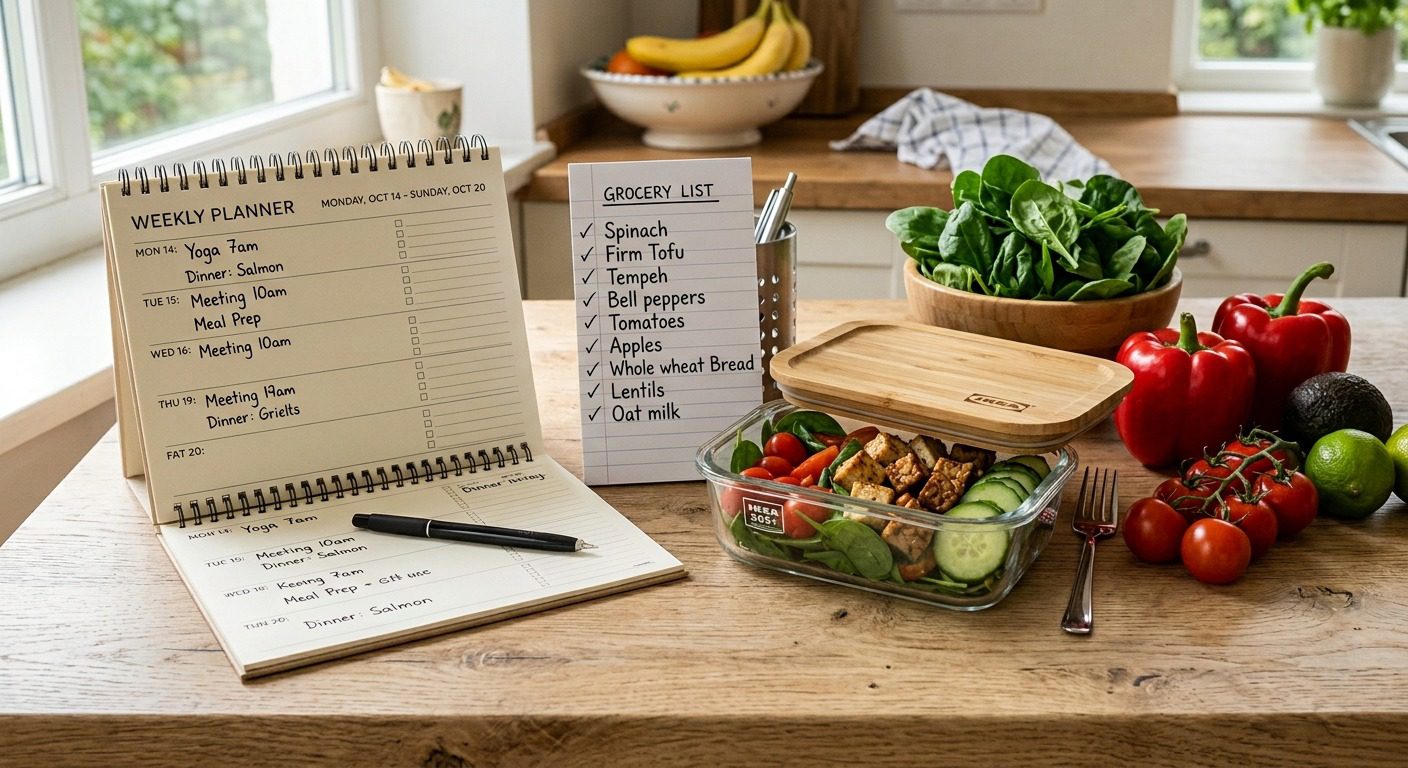
Before creating a meal routine, look at your actual week.
Not your ideal week. Your real one, and ask yourself:
Which days are the busiest?
Maybe Tuesday and Thursday are packed with work, school activities, errands, or appointments.
Those probably aren't the nights to plan elaborate meals.
Choose something easy instead.
Which meals are easiest for you?
If breakfast is the easiest meal of the day, don't overthink it.
If lunch is where things usually fall apart, put more planning there.
If dinner is the hardest, create a small rotation of meals that require minimal thought.
When do you have time to cook?
You might have 30 minutes on Sunday but almost no time on Wednesday.
Use that information.
Cook something that can become leftovers.
Wash and prep some vegetables.
Cook a grain, or make a pot of beans or lentils. You're not trying to prepare your entire week. You're simply making future meals easier.
Create an “Automatic Meal”
One of the easiest ways to reduce decision fatigue is to choose one meal that becomes almost automatic.
This could be lunch, dinner, or even breakfast.
For example:
Lunch: Grain bowl with chickpeas, spinach, roasted vegetables, and lemon-tahini dressing.
Dinner: Pasta with white beans, tomatoes, spinach, and herbs.
Breakfast: Oatmeal with fruit, nut butter, and seeds.
You can change small details when you want variety, but the basic structure stays the same.
This works because you aren't starting from zero every day. And when your schedule gets busy, having something familiar to fall back on can make a big difference.
Keep Your Grocery List Simple
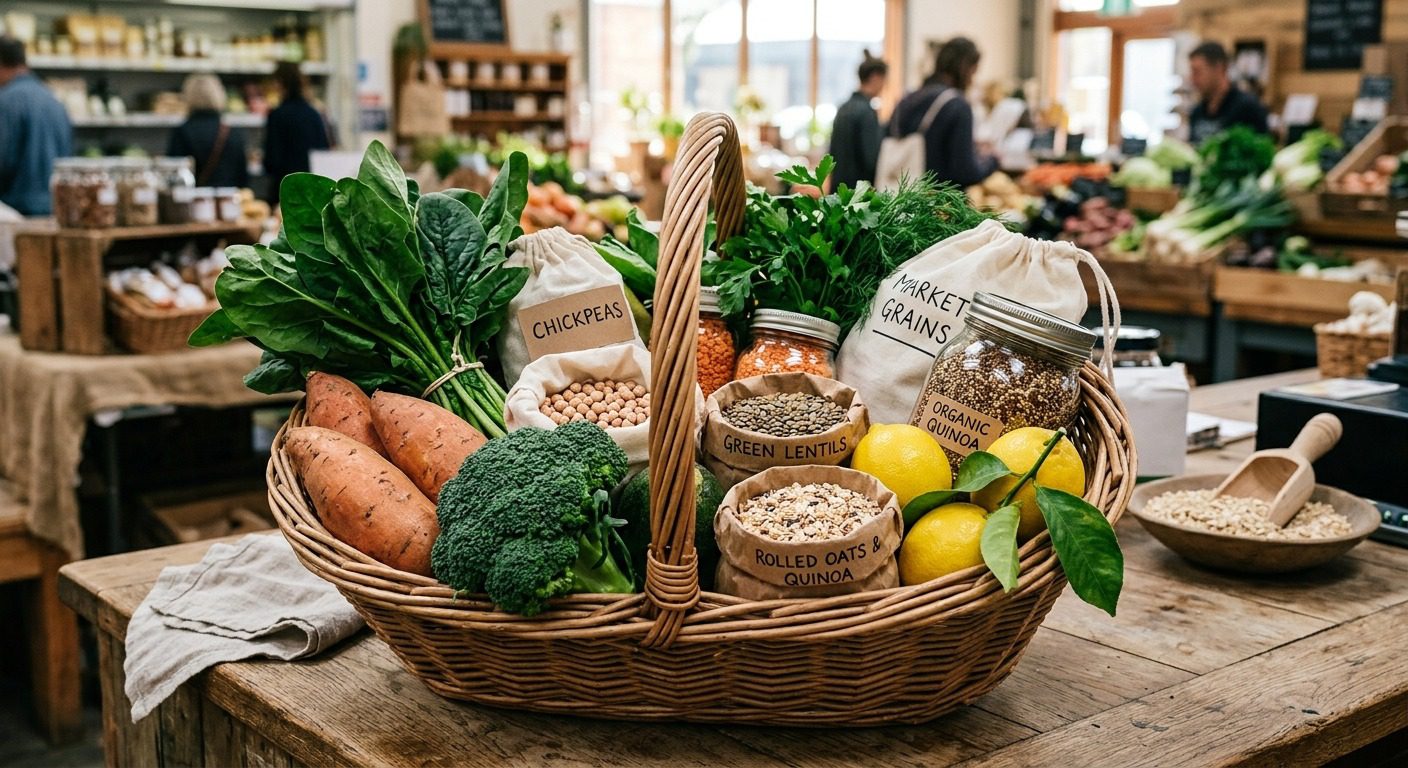
A complicated grocery list can create its own kind of stress.
You buy ingredients for several recipes, use some of them, forget about others, and eventually find yourself staring into the refrigerator wondering what happened.
Instead, build your grocery list around ingredients that can work in multiple meals.
Think:
- Lentils
- Chickpeas
- Brown rice or quinoa
- Sweet potatoes
- Broccoli
- Bell peppers
- Spinach
- Garlic
- Lemons
- A few favorite herbs and seasonings
These ingredients can become bowls, soups, stir-fries, pasta dishes, roasted vegetable plates, and more.
The goal isn't to make every meal exciting.
It's to make your ingredients useful.
Less waste.
Less decision-making.
More flexibility.
Don't Underestimate Leftovers
Leftovers are one of the easiest ways to make a busy week easier.
But leftovers don't have to mean eating the same meal three days in a row.
Think of them as building blocks.
Roasted vegetables from dinner can become part of tomorrow's grain bowl.
Cooked lentils can go into soup, tacos, or a salad.
A batch of quinoa can work with different vegetables, beans, sauces, or seasonings throughout the week.
This approach gives you variety without requiring completely different recipes.
A simple example:
Sunday: Roast sweet potatoes and broccoli. Cook quinoa.
Monday: Quinoa bowl with roasted vegetables and chickpeas.
Tuesday: Add the leftover vegetables to a quick stir-fry.
Wednesday: Use the remaining quinoa in a warm bowl with lentils and greens.
Same basic ingredients.
Different meals. That's the kind of flexibility a sustainable routine needs.
Your Backup Meal Matters
Here's something people often forget when planning meals:
Plan for the nights when your plan falls apart.
Because those nights will happen.
Maybe you get home late, you're exhausted, or maybe the recipe you planned sounds terrible by the time you actually have to make it.
Instead of relying on willpower, keep a few easy backup options available.
Think:
- Chickpea pasta with spinach and tomato sauce
- Beans and rice with frozen vegetables
- A quick vegetable soup
- Toast with avocado and a side of fruit
- A grain bowl made from leftovers
These aren't emergency meals because you “failed.” They're part of the plan, and that's an important distinction.
Recipe of the Week
Creamy Tomato White Bean Pasta
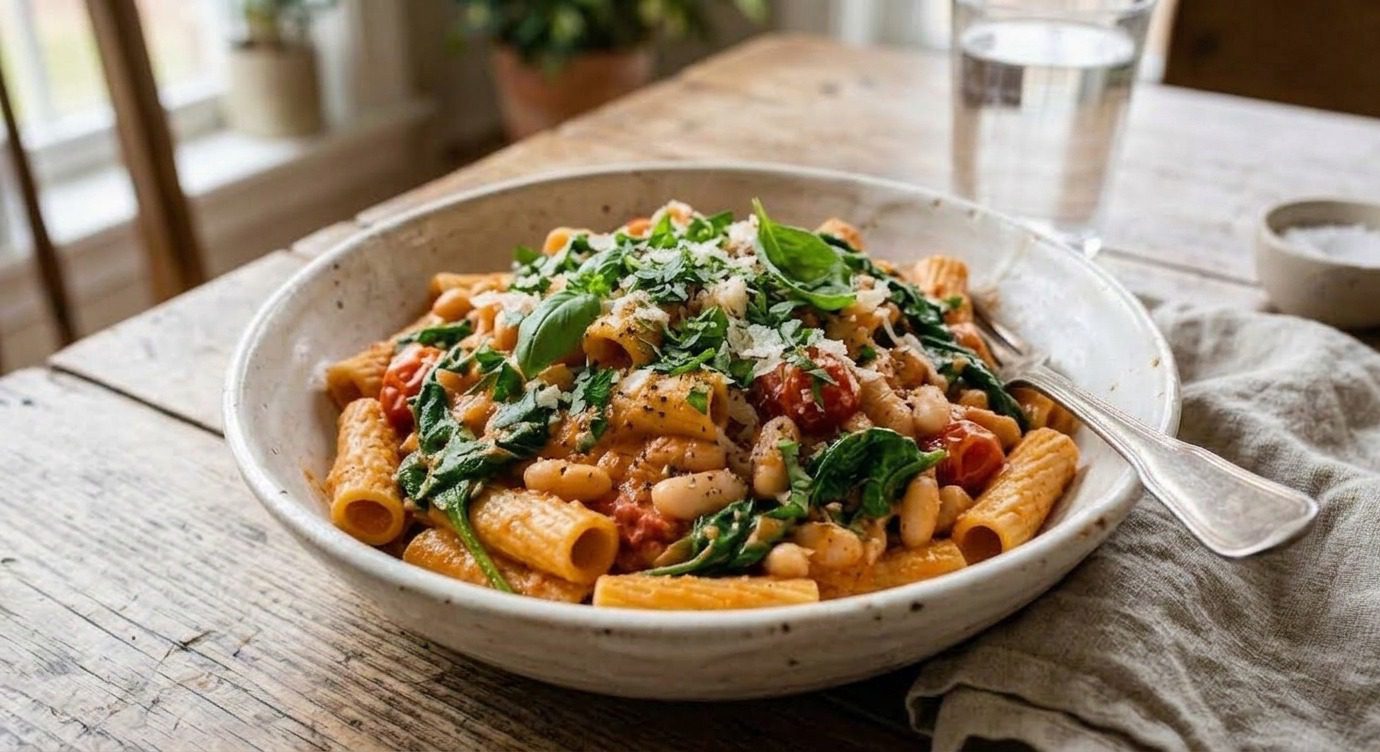
This is exactly the kind of meal that fits a busy September. It's simple enough for a weeknight, uses familiar ingredients, and can easily become leftovers.
Ingredients
- 8 ounces pasta of your choice
- 1 can white beans, drained and rinsed
- 1 can crushed tomatoes
- 2 cloves garlic, minced
- 2 large handfuls of fresh spinach
- 1 teaspoon Italian seasoning
- 1/2 cup vegetable broth
- Fresh basil, optional
- Fresh lemon juice
- Salt and black pepper to taste
Instructions
- Cook the pasta according to the package directions. Reserve a little pasta water before draining.
- In a large pan, combine the crushed tomatoes, garlic, Italian seasoning, and vegetable broth.
- Simmer for about 5 to 7 minutes, allowing the sauce to thicken slightly.
- Stir in the white beans and spinach. Cook until the spinach wilts and everything is heated through.
- Add the cooked pasta and toss everything together. Add a small splash of reserved pasta water if the sauce needs loosening.
- Finish with fresh basil, lemon juice, salt, and black pepper.
Serve warm.
It's comforting without being complicated, and the leftovers can make tomorrow's lunch much easier.
A Simple September Challenge
This week, don't try to overhaul everything.
Choose one meal each day that you can make almost automatically.
Maybe it's your lunch.
Maybe it's dinner.
Maybe it's a simple breakfast.
Pick something you already enjoy and make it easier to repeat.
Then notice what happens when you remove some of the decision-making.
You may find that healthy eating becomes less about motivation and more about having a few systems that quietly work in the background.
Food Safety Tip for Busy September Days
If you're packing lunch for work or school, remember that perishable foods need to stay cold.
Foods such as cooked grains, beans, cut vegetables, leftovers, dairy products, and prepared meals should be kept refrigerated or packed with a cold source in an insulated lunch bag.
Don't leave perishable food sitting at room temperature for the entire day.
A little planning here helps your convenient meal stay safe as well as satisfying.
What About the Days You Eat Out?
Take You Can Eat Here with You
Real life includes restaurants.
It includes takeout.
It includes dinners with friends, work lunches, travel, celebrations, and days when cooking simply isn't happening.
You don't have to treat those meals as a break from healthy eating.
Instead, learn how to navigate them.
That's one of the reasons we created You Can Eat Here, a practical guide for making food choices in real-world situations.
It covers restaurants, fast food, fine dining, different cuisines, social occasions, travel, simple substitutions, hidden ingredients, and ways to customize meals.
Because eating well should still work when you're not in your own kitchen.
Created by Chef Brandy, this practical resource helps you enjoy restaurant meals with confidence while staying true to your healthy eating goals.
Inside you'll find:
Practical Restaurant Guidance
Discover balanced options at more than 55 popular restaurants, making it easier to choose meals that leave you feeling energised.
Smart Substitutions
Learn simple swaps that improve the nutritional balance of your meal without taking away the enjoyment.
Confidence Wherever Life Takes You
Whether you're meeting friends for dinner, travelling for work, or grabbing lunch between appointments, you'll have practical tools to help you make confident choices.
Healthy eating should fit into your lifestyle, not compete with it.
You Can Eat Here
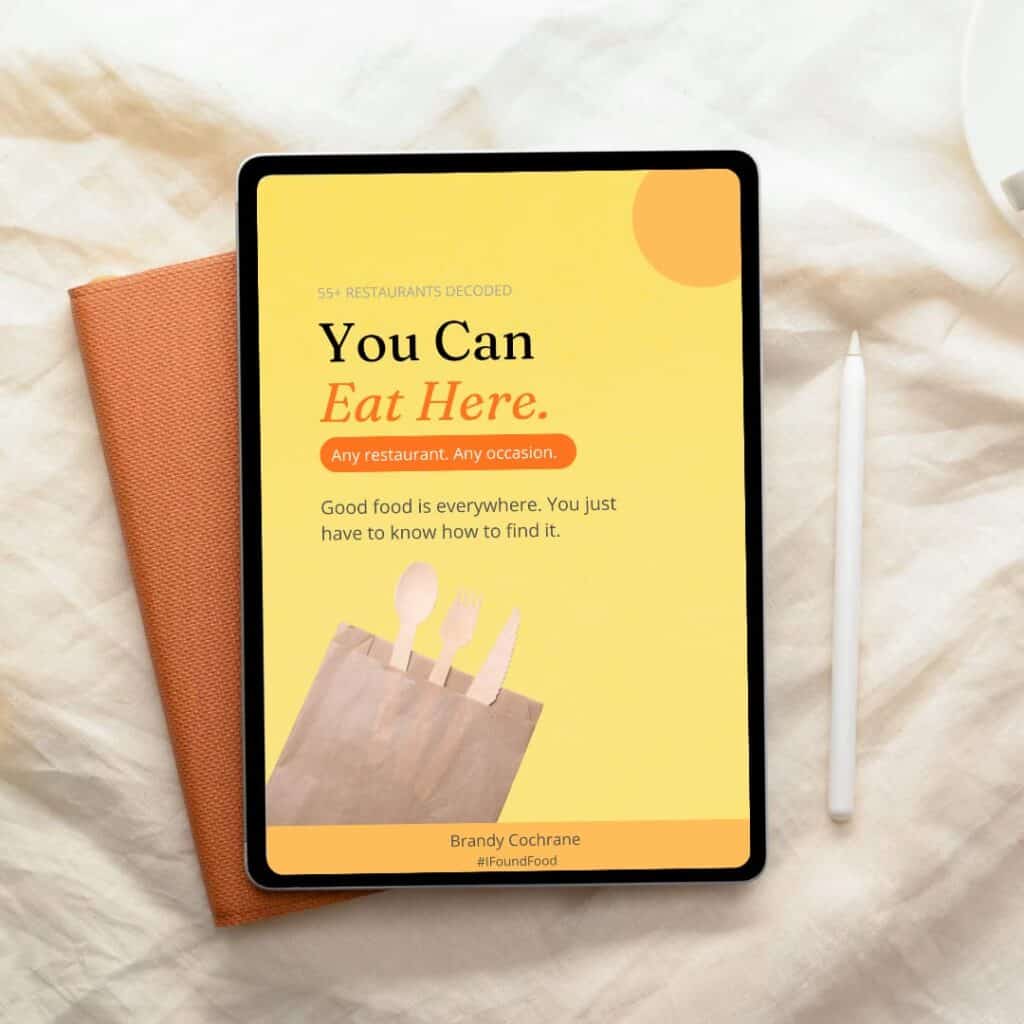
Your Guide to Finding Good Food Anywhere
Chef Brandy created You Can Eat Here to make eating out feel easier.
Whether you're travelling, working late, or spending the day out, you'll have practical guidance to help you eat well with confidence.
Click HERE to order your copy of You Can Eat Here today.
Need A Simple Reset?
If your eating habits have felt chaotic lately, you're not alone.
The 5-Day Sweet Escape Challenge was designed to help you simplify healthy eating without adding more pressure.
Inside you'll receive:
One Short Video Daily
Simple guidance you can apply immediately.
One Balanced Recipe
Easy plant-based meals that support energy and satisfaction.
One Small Action Step
Tiny habits that create meaningful change over time.
Healthy eating doesn't need to feel complicated.
Sometimes it starts with one satisfying meal.
And then another.
And another.
Join the Free 5-Day Sweet Escape Challenge HERE

You Don't Need a September Reset
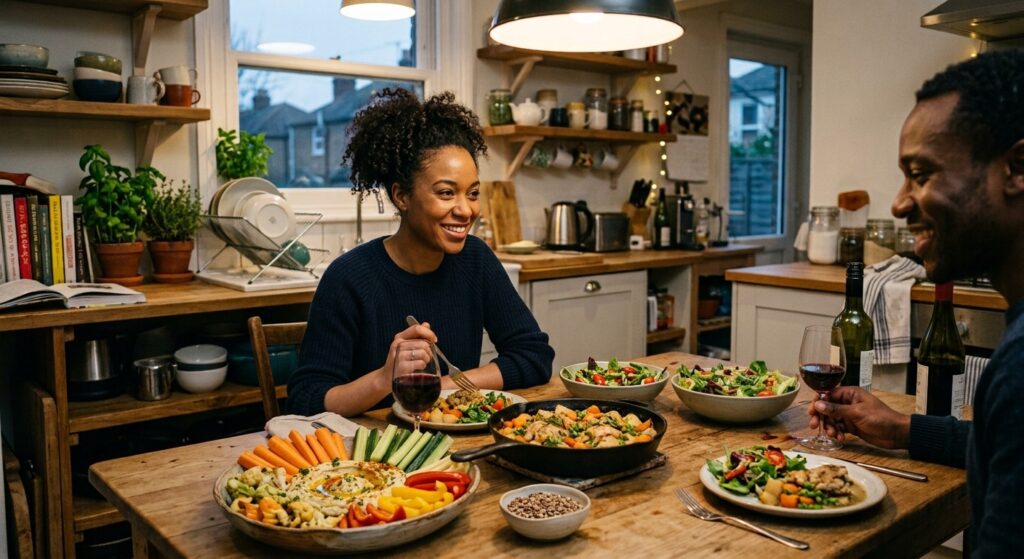
There's nothing wrong with wanting a fresh start.
But you don't need to become a completely different person because the calendar moved into September.
You don't need a perfect grocery list.
You don't need seven new recipes.
You don't need to cook every meal from scratch.
You don't need to follow a routine perfectly.
Instead, ask yourself:
What would make eating well easier this week?
Maybe it's buying fewer ingredients.
Maybe it's cooking once and using the leftovers twice.
Maybe it's keeping a few quick meals on hand.
Maybe it's choosing one meal that becomes automatic.
Maybe it's simply permitting yourself to have imperfect days without turning them into an entire “off week.”
That's how sustainable routines are built.
Small decisions.
Repeated often. With enough flexibility to survive real life.