
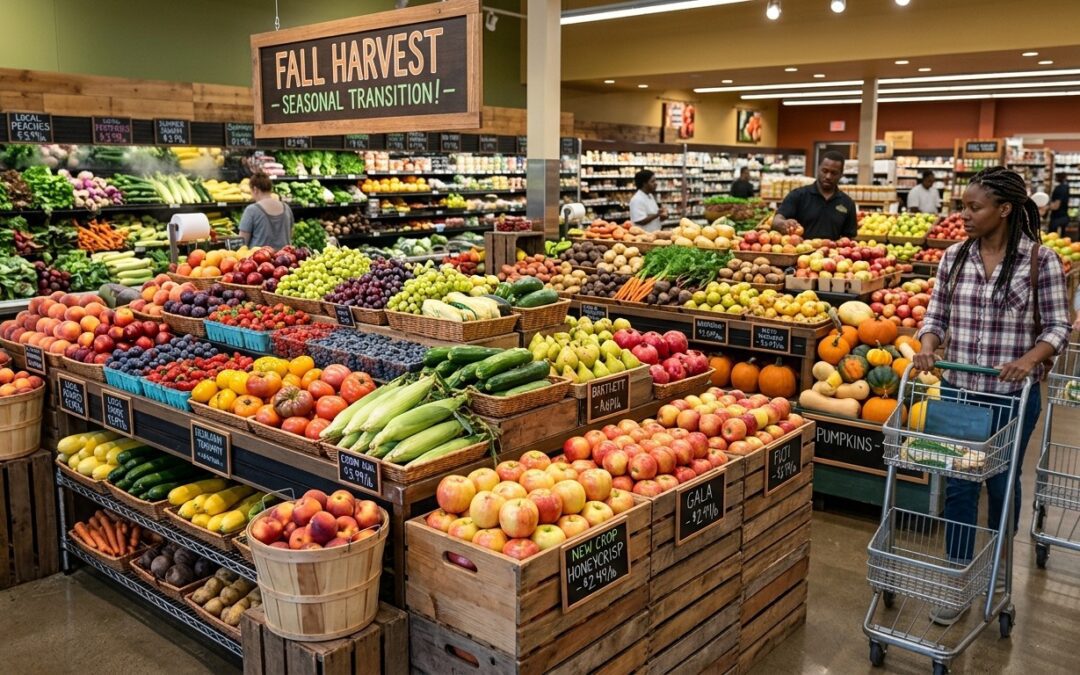
There’s something about September that makes the grocery store feel a little different.
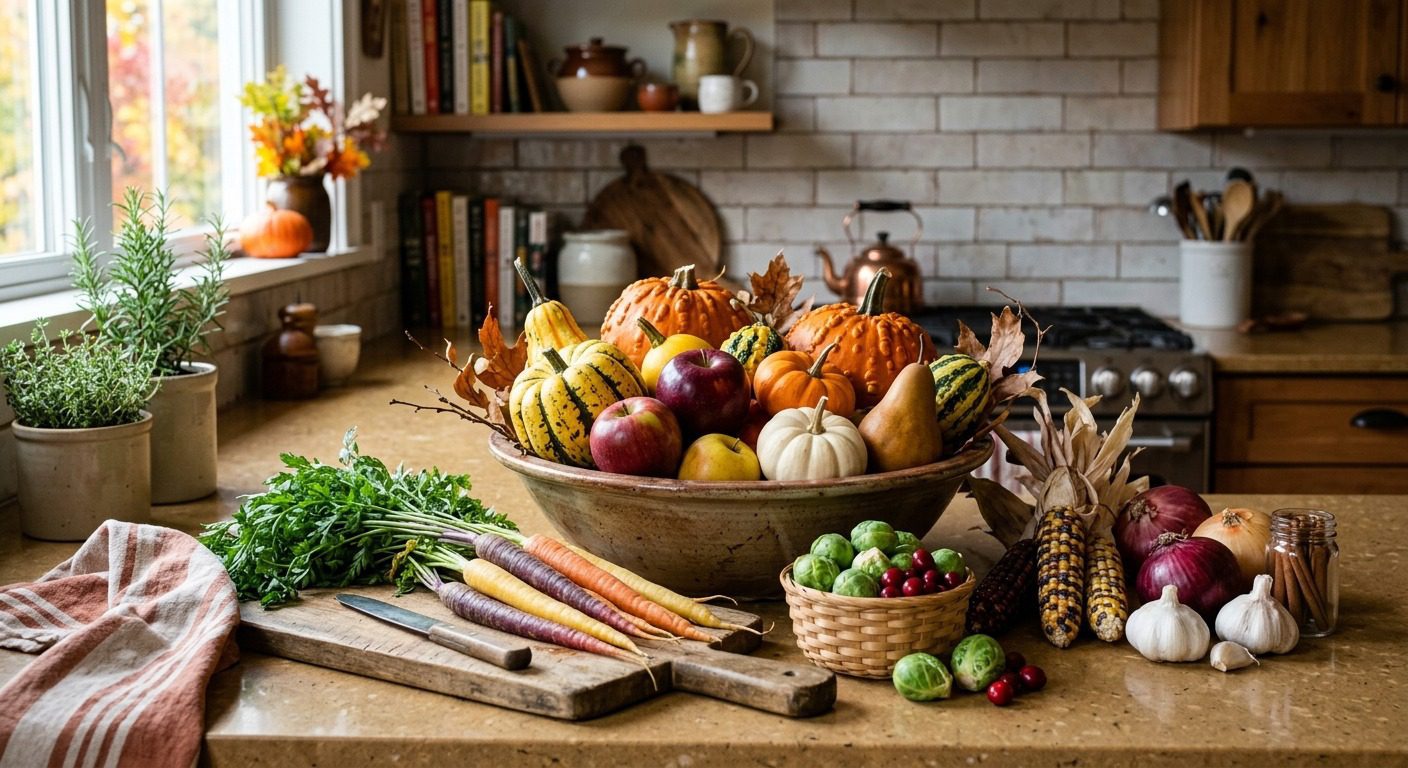
Bright summer produce is still around, but you start noticing sweet potatoes, apples, pears, squash, Brussels sprouts, cauliflower, and heartier greens showing up more often.
And honestly, that can be a good thing.
A change in season doesn't mean you need a completely new eating routine.
It can simply invite you to change what you're putting on your plate.
If summer was all about cold salads, fresh fruit, and lighter meals, fall naturally brings more roasted vegetables, warm grains, hearty beans, soups, and cozy bowls.
That doesn't mean you need a “fall diet.”
It means your meals can evolve.
Healthy eating doesn't have to stay exactly the same all year. Sometimes, a new season is all the inspiration you need to make familiar meals feel interesting again.
What Does Seasonal Eating Actually Mean?
Seasonal eating simply means choosing foods that are naturally available during a particular time of year.
It's not a complicated system.
And it doesn't mean you can only eat foods that are technically in season.
You can still enjoy frozen, canned, or imported foods. You can still eat your favorite summer vegetables. You don't need to completely change your grocery list because the calendar says fall is coming.
Instead, think of seasonal produce as another option.
Maybe you notice apples at the store and decide to add them to your lunch.
Maybe sweet potatoes become part of your weekly dinner rotation.
Maybe you pick up a head of cauliflower and roast it instead of buying the same vegetables you've been making all summer. Small changes can make familiar meals feel new.
Why Seasonal Produce Can Make Healthy Eating Easier
One reason seasonal eating can be helpful is variety.
When you're eating the same meals over and over, it can start to feel boring.
That doesn't necessarily mean you need more recipes.
Sometimes you just need different ingredients.
Imagine your usual grain bowl.
You could make it with summer tomatoes and cucumber.
Then, as the weather changes, you could swap those for roasted sweet potatoes, cauliflower, or Brussels sprouts.
The basic meal stays the same.
The ingredients change.
That's a much easier way to create variety without rebuilding your entire routine.
Fall Produce to Look For
Depending on where you live, availability will vary, but many fall favorites include:
Sweet Potatoes
Sweet potatoes are incredibly flexible.
Roast them for grain bowls, mash them as a side, add them to soups, or toss them into tacos and wraps.
They're also a great ingredient to cook in batches because leftovers can be used in several different meals.
Apples
Apples aren't just for snacks.
Slice them into oatmeal, add them to salads, pair them with nut butter, or chop them into a simple grain bowl for a little sweetness and crunch.
Pears
Pears work beautifully in salads, oatmeal, grain bowls, and simple snacks.
Their natural sweetness can add something different to meals that might otherwise feel repetitive.
Winter Squash
Butternut squash, acorn squash, and other winter squash varieties can turn into soups, roasted sides, pasta sauces, and warm bowls.
They may look intimidating at first, but pre-cut options can make preparation much easier.
Brussels Sprouts
Roast them until tender and slightly crisp, shred them into a salad, or add them to a grain bowl.
If you've decided you don't like Brussels sprouts because of one childhood experience, it might be worth giving them another chance.
Cauliflower
Cauliflower can be roasted, added to soups, used in grain bowls, or tossed into curries and stir-fries.
It's one of those vegetables that can work with many different flavors.
Leafy Greens
Don't forget the greens.
Spinach, kale, collard greens, and other leafy vegetables can work in soups, grain bowls, pasta dishes, smoothies, and salads.
A seasonal shift doesn't have to mean leaving vegetables behind.
It can mean finding new ways to enjoy them.
You Don't Need a New Recipe for Every Ingredient
This is where seasonal eating can become unnecessarily complicated.
You buy a new vegetable.
Then you search for a recipe.
Then you buy seven ingredients you've never used before.
Then you have half a bottle of something sitting in the refrigerator for three months.
Sound familiar?
Instead, start with meals you already know.
If you usually make grain bowls:
Add roasted sweet potatoes or Brussels sprouts.
If you usually make pasta:
Try adding roasted cauliflower, spinach, or squash.
If you usually make soup:
Add lentils, white beans, sweet potatoes, or leafy greens.
If you usually make stir-fries:
Try broccoli, cauliflower, cabbage, or snap peas.
The goal is not to become an expert in seasonal cooking.
It's simply to use what you already know in a slightly different way.
Build Your Fall Grocery List Around Overlap
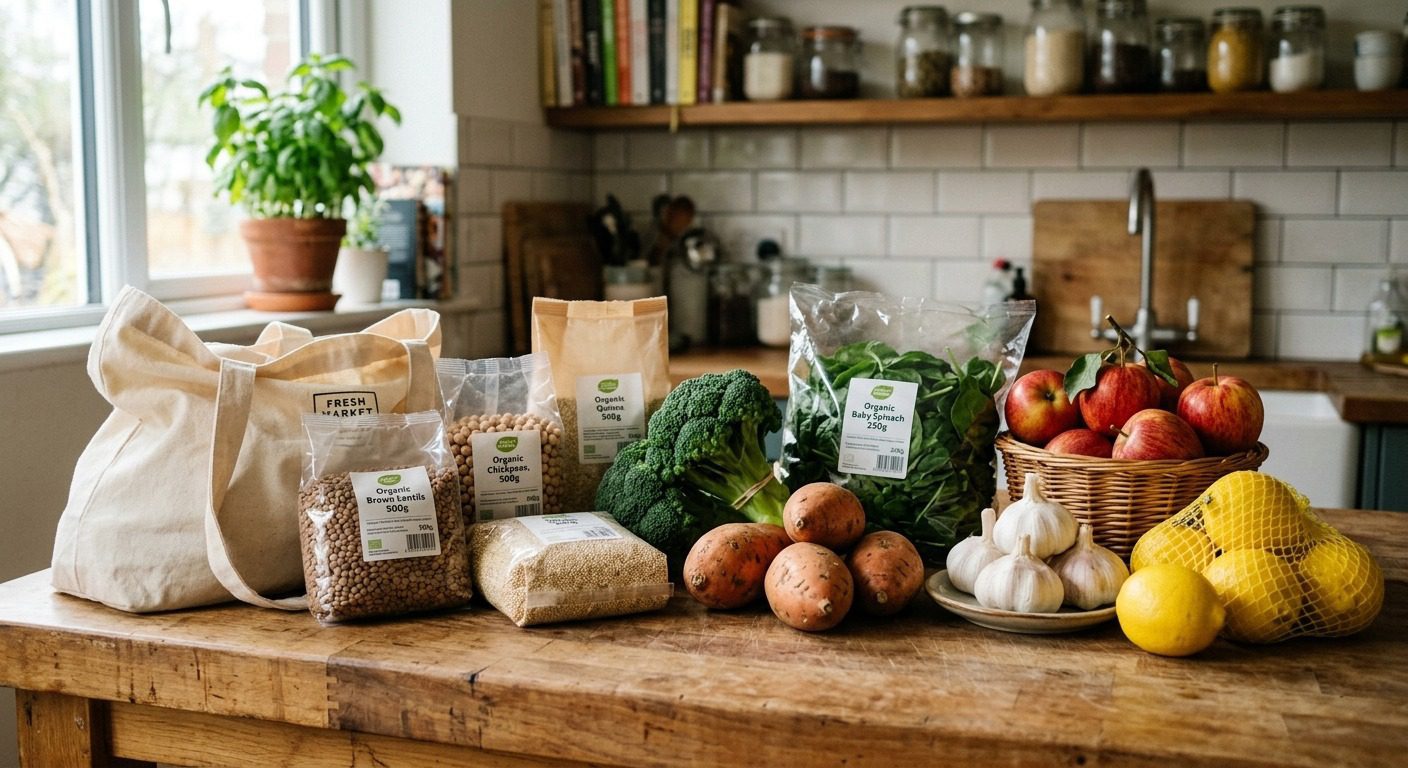
A good grocery list should give you options.
Instead of buying ingredients for five completely unrelated recipes, choose foods that can work across several meals.
For example:
Base: Brown rice or quinoa
Protein-rich foods: Chickpeas and lentils
Vegetables: Sweet potatoes, broccoli, spinach, and cauliflower
Fruit: Apples or pears
Flavor: Garlic, lemon, tahini, herbs, and spices
From that list, you can make:
- Warm grain bowls
- Lentil soup
- Chickpea curry
- Roasted vegetable plates
- Pasta with white beans and greens
- Simple wraps
- Grain salads
One grocery trip.
Several meals.
Much less mental work.
Recipe of the Week
Maple Roasted Sweet Potato & Chickpea Bowl
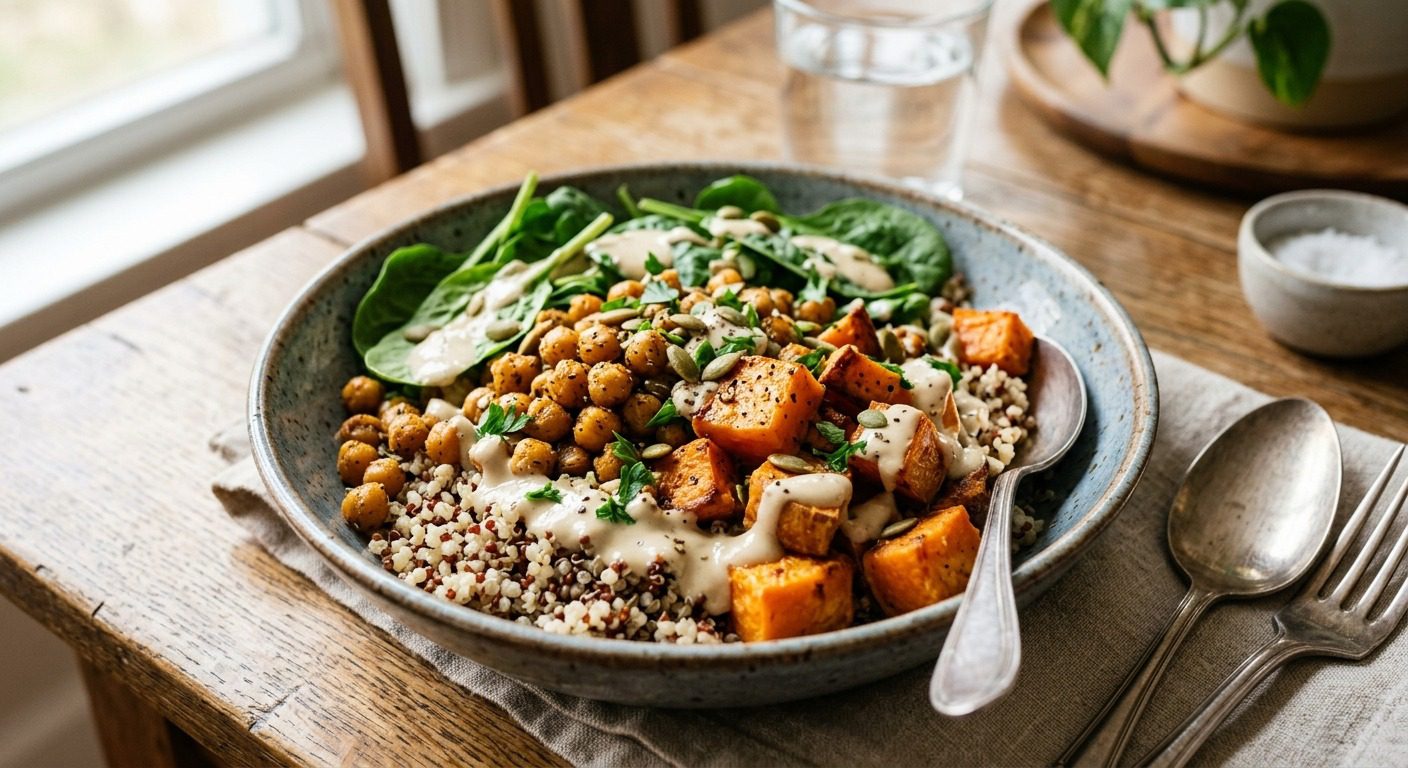
This is a simple way to welcome fall without making your kitchen feel like a project.
It's warm, colorful, filling, and flexible enough to adjust based on what you already have.
Ingredients
- 2 medium sweet potatoes, peeled and cubed
- 1 can of chickpeas, drained and rinsed
- 2 cups cooked quinoa or brown rice
- 2 cups fresh spinach or other leafy greens
- 1 tablespoon maple syrup
- 1 teaspoon smoked paprika
- 1/2 teaspoon garlic powder
- Salt and black pepper to taste
- Pumpkin seeds, optional
For the Tahini-Lemon Dressing
- 2 tablespoons tahini
- Juice of 1 lemon
- 1 to 2 tablespoons water
- 1/2 teaspoon maple syrup
- Pinch of salt
Instructions
- Preheat your oven to 425°F.
- Place the cubed sweet potatoes and chickpeas on a baking sheet.
- Add the maple syrup, smoked paprika, garlic powder, salt, and black pepper. Toss until evenly coated.
- Roast for about 25 to 30 minutes, turning halfway through, until the sweet potatoes are tender.
- While they cook, prepare the dressing by whisking together tahini, lemon juice, water, maple syrup, and salt. Add more water if needed to reach your preferred consistency.
- Warm your cooked quinoa or brown rice if needed.
- Build your bowls with the grain, fresh greens, roasted sweet potatoes, and chickpeas.
- Drizzle with the tahini-lemon dressing and finish with pumpkin seeds if desired.
Serve warm.
Make It Your Own
This is a formula, not a rule.
Don't have quinoa? Use brown rice.
Don't have spinach? Try kale or another leafy green.
No pumpkin seeds? Skip them.
Want more vegetables? Add roasted broccoli or cauliflower.
That's the point.
A good meal should be flexible enough to fit your kitchen.
Your Seasonal Eating Challenge
This week, we're keeping the challenge very simple:
Try one seasonal fruit or vegetable.
That's it.
Choose something you don't normally buy.
Maybe it's a new variety of squash, a different kind of apple.
Maybe you've never cooked Brussels sprouts yourself.
Pick one.
Bring it home.
Try it in a way that feels manageable.
You don't need to fall in love with it.
The goal is simply to expand your options.
Seasonal Eating Doesn't Have to Be Expensive
Another misconception is that eating seasonally always means buying specialty produce from a farmers’ market.
It doesn't.
Look at what's available at your regular grocery store.
Compare prices.
Buy what makes sense for your budget.
Frozen vegetables can be incredibly useful, especially when fresh produce is expensive or you're worried about food waste.
Canned beans and lentils can also save time and make it easier to build meals around plant foods.
And don't underestimate simple ingredients.
You don't need specialty powders, expensive superfoods, or unusual ingredients to make a satisfying seasonal meal.
Sweet potatoes.
Beans.
Greens.
Grains.
Fruit.
A few seasonings.
That's plenty.
Let Convenience Work for You
Healthy eating doesn't have to mean doing everything from scratch.
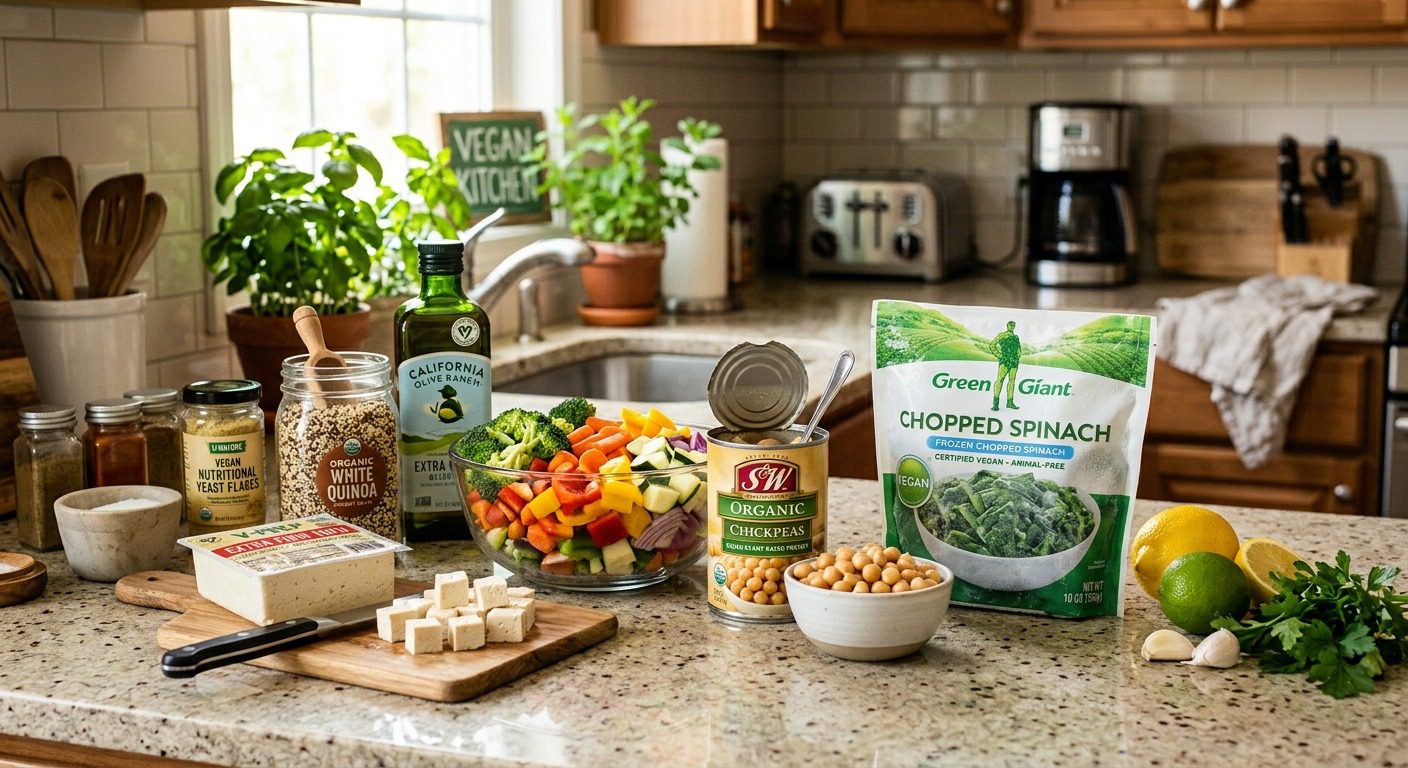
If pre-cut vegetables make you more likely to eat vegetables, buy them.
If frozen spinach saves you time, use it.
If canned chickpeas mean dinner takes 20 minutes instead of an hour, keep them in your pantry.
Convenience isn't the enemy.
The best option is often the one you're actually going to use.
This becomes especially important as September gets busier.
You don't need to prove anything by spending hours preparing every ingredient yourself.
Use the shortcuts that make healthy meals easier.
Food Safety Tip: Wash and Store Produce Properly
Fall produce still needs proper handling.
Wash fresh fruits and vegetables under running water before preparing or eating them, including produce you plan to peel.
For leafy greens and other vegetables that you're preparing ahead of time, make sure they're stored properly and kept refrigerated.
Once fruits and vegetables are cut, they become more perishable, so refrigerate them promptly.
And if you're buying pre-cut produce, keep it refrigerated and follow the package storage instructions.
A good grocery list is only useful if the food stays safe long enough to make it onto your plate.
A Seasonal Meal Doesn't Need to Look Like Fall
You don't need to make everything pumpkin-flavored.
You don't need to recreate every seasonal recipe you see online.
And you definitely don't need to completely change how you eat because September arrived.
Instead, think about adding.
Add an apple to breakfast.
Add roasted sweet potatoes to dinner.
Try a new leafy green.
Swap one familiar vegetable for another.
Make a warm grain bowl instead of your usual cold salad.
Small changes can keep your meals interesting without making them complicated.
Don't Forget About Eating Out
Fall also brings a full calendar.
Work events.
Family gatherings.
Weekend activities.
Football games.
Dinners with friends.
Travel.
You won't always be eating the meal you planned at home, and that's okay.
A sustainable approach to eating has to work outside your kitchen too.
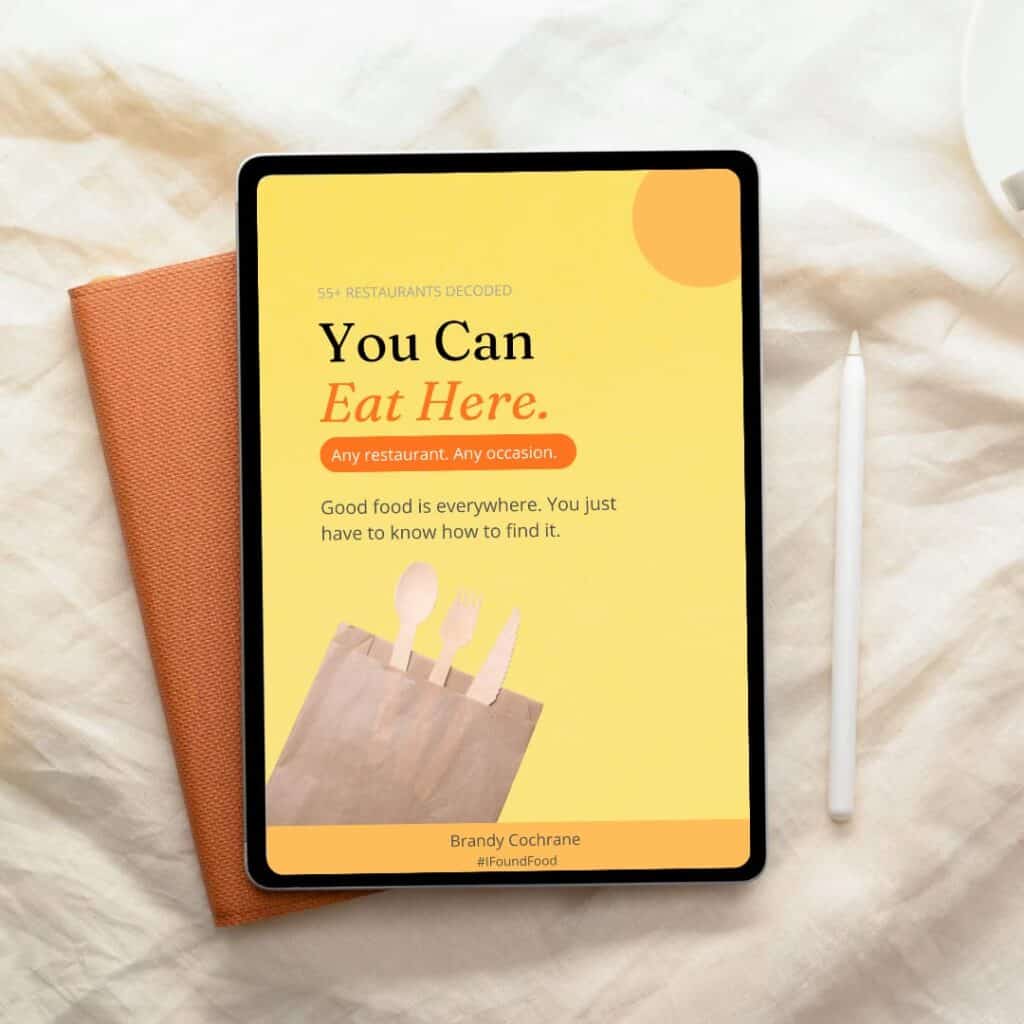
That's why You Can Eat Here is such a useful resource.
It was created to help you navigate restaurants, fast food, fine dining, different cuisines, travel, social occasions, and everyday situations where you want to make a satisfying choice without overthinking every ingredient.
Because seasonal eating shouldn't mean staying home all season.
Your Guide to Finding Good Food Anywhere
Chef Brandy created You Can Eat Here to make eating out feel easier.
Whether you're travelling, working late, or spending the day out, you'll have practical guidance to help you eat well with confidence.
Click HERE to order your copy of You Can Eat Here today.
Need A Simple Reset?
If your eating habits have felt chaotic lately, you're not alone.
The 5-Day Sweet Escape Challenge was designed to help you simplify healthy eating without adding more pressure.
Inside you'll receive:
One Short Video Daily
Simple guidance you can apply immediately.
One Balanced Recipe
Easy plant-based meals that support energy and satisfaction.
One Small Action Step
Tiny habits that create meaningful change over time.
Healthy eating doesn't need to feel complicated.
Sometimes it starts with one satisfying meal.
And then another.
And another.
Join the Free 5-Day Sweet Escape Challenge HERE

Your Grocery List Doesn't Need a Complete Makeover
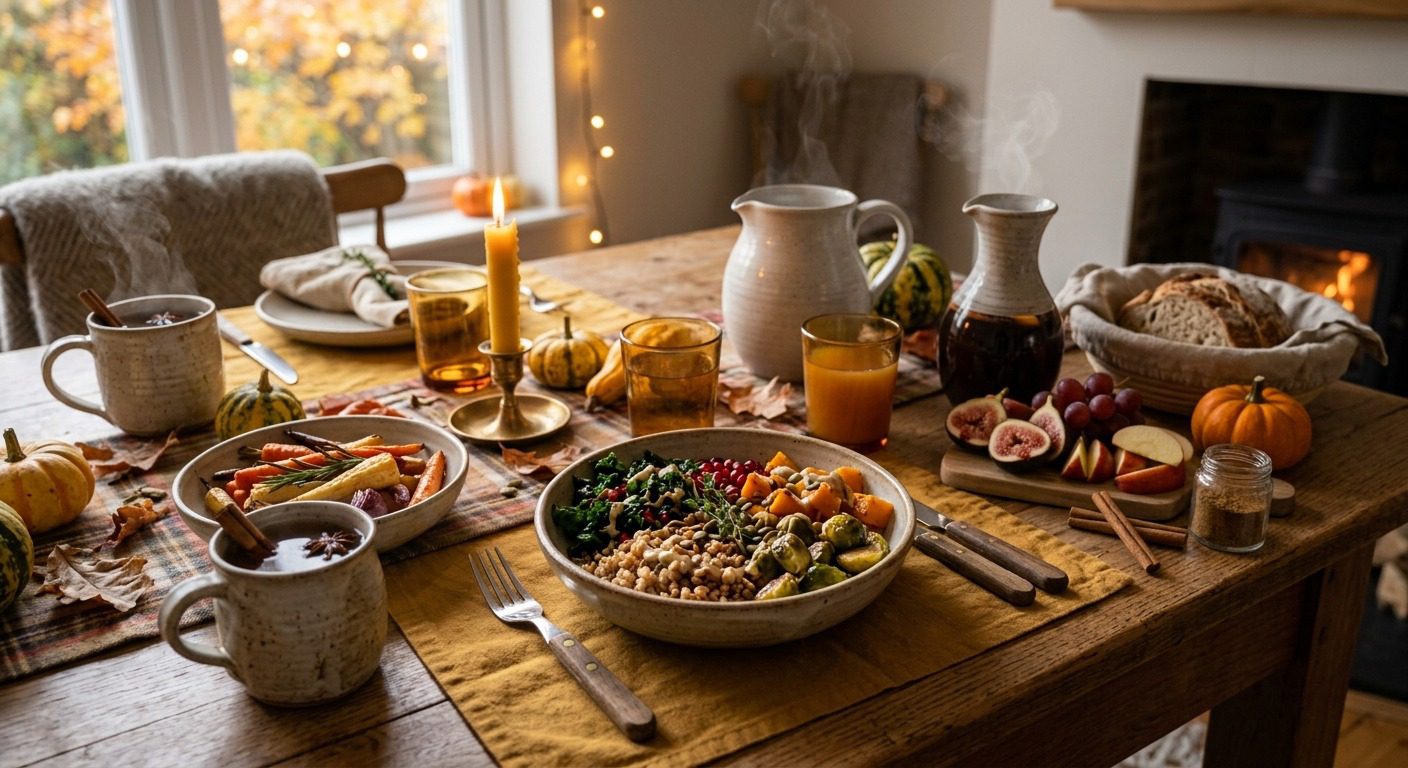
If your current grocery list works, keep it.
Just add one or two seasonal ingredients.
That's enough.
Healthy eating doesn't have to be a constant search for something new.
Sometimes the easiest way to make your meals feel fresh is to take what already works and give it a seasonal twist.
And that's what makes this time of year so useful.
You don't need a new routine.
You can simply let your existing routine evolve.