Have you ever finished lunch, felt satisfied for a little while, and then found yourself searching the kitchen for something else to eat?
Maybe you had a quick salad, a bowl of cereal, or a meal that seemed perfectly reasonable at the time. Yet, not long afterward, you were hungry again.
It can be frustrating when you're trying to make balanced food choices but still don't feel satisfied after eating.
The good news is that you don't need to follow complicated meal plans or change everything about your diet. Sometimes, a few simple additions can make your meals more satisfying and easier to enjoy.
At Plant Candy, we believe everyday eating should work with your life, not make it harder. And one helpful place to start is understanding what makes a meal feel complete.
Why You Might Feel Hungry Again Soon After Eating
Hunger is normal. Your body needs regular nourishment, and feeling hungry between meals doesn't automatically mean you've done anything wrong.
However, some meals may leave you feeling less satisfied than others.
This can happen for several reasons. You may not have eaten enough to meet your needs, your meal may have lacked variety, or it may not have included a combination of foods that helps you feel satisfied for longer.
For example, a meal made mostly of a low-fiber carbohydrate may feel different from one that combines whole grains, beans, vegetables, and a source of healthy fat.
Your activity level, sleep, stress, and individual needs can also influence hunger.
Instead of blaming yourself for wanting another snack, consider a more useful question:
What would help this meal satisfy me better?
That small shift can make everyday eating feel less confusing.
The Three Building Blocks of a Satisfying Meal
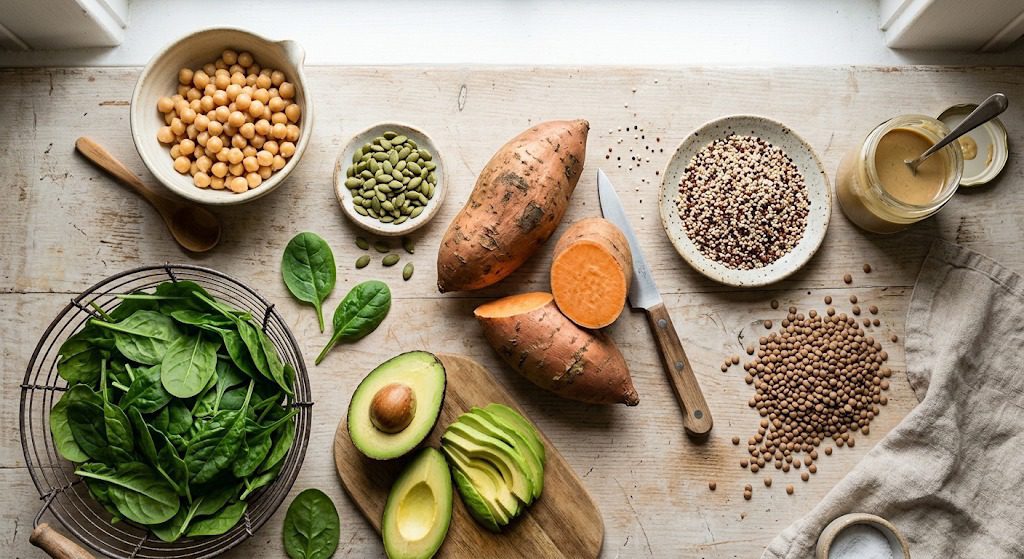
You don't need to calculate every nutrient in your food. A practical starting point is to include a combination of fiber-rich carbohydrates, protein, and healthy fats.
1. Fiber-Rich Foods
Fiber is found in foods such as beans, lentils, chickpeas, vegetables, fruits, oats, and whole grains.
These foods add texture and variety to meals, and many help support digestion and fullness.
Easy ways to include more fiber-rich foods include:
- Adding chickpeas to a salad.
- Choosing brown rice or quinoa for a grain bowl.
- Mixing lentils into soups and stews.
- Serving fruit alongside breakfast or a snack.
- Adding vegetables to pasta dishes.
You don't need to change everything at once. Start with one addition that works for the meal you're already making.
2. Protein-Rich Foods
Protein is another important part of a satisfying meal.
Plant-forward sources include chickpeas, beans, lentils, tofu, tempeh, nuts, seeds, and quinoa. Depending on your usual eating pattern, other protein-rich foods can fit too.
Try adding white beans to pasta, chickpeas to a grain bowl, or lentils to a vegetable soup.
These small changes can make familiar meals more substantial without requiring an entirely new recipe.
3. Healthy Fats
Fats contribute flavor and texture and can help make meals feel more satisfying.
Avocado, tahini, nuts, seeds, and nut butters are useful options for plant-forward meals.
For example, a lemon-tahini dressing can bring a simple bowl of quinoa, vegetables, and chickpeas together. A sprinkle of pumpkin seeds can add crunch to soup or roasted vegetables.
The goal isn't to add every ingredient to every meal. It's to find combinations you enjoy and that suit your needs.
You Don't Have to Make Every Meal from Scratch
One reason balanced eating can feel difficult is the belief that every meal needs to be carefully planned and freshly prepared.
That can quickly become exhausting, especially during a busy workweek.
Instead, think about how you can improve meals you're already eating.
If you usually make pasta, add white beans or chickpeas.
If you enjoy rice, serve it with lentils and vegetables.
If you make soup, include beans or lentils alongside the vegetables.
If your usual lunch is a salad, consider adding a grain, a protein-rich ingredient, and a dressing you enjoy.
These aren't complicated food rules. They're flexible ways to make everyday meals more satisfying.
Try the Add-One-Thing Approach
When a meal feels incomplete, you don't always need to start again.
Simply ask yourself whether one addition would help.
- A little more substance? Add beans, lentils, tofu, or another protein-rich food.
- More fiber and variety? Add vegetables, fruit, or a whole grain.
- More flavor and satisfaction? Try tahini dressing, avocado, nuts, or seeds.
This approach also helps you use ingredients you already have, which can reduce unnecessary grocery shopping and food waste.
Recipe of the Week
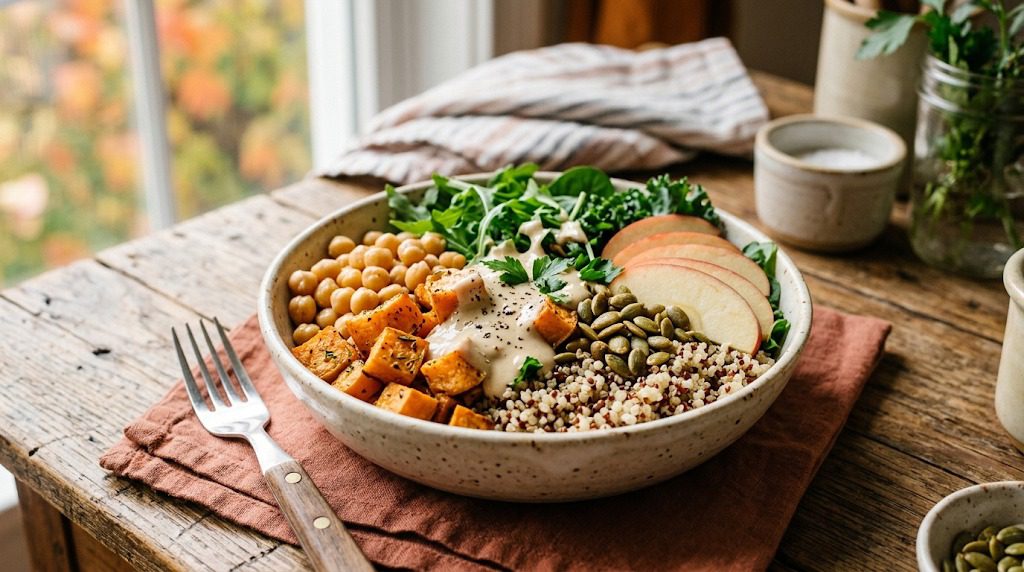
Harvest Chickpea & Quinoa Bowl with Apple-Tahini Dressing
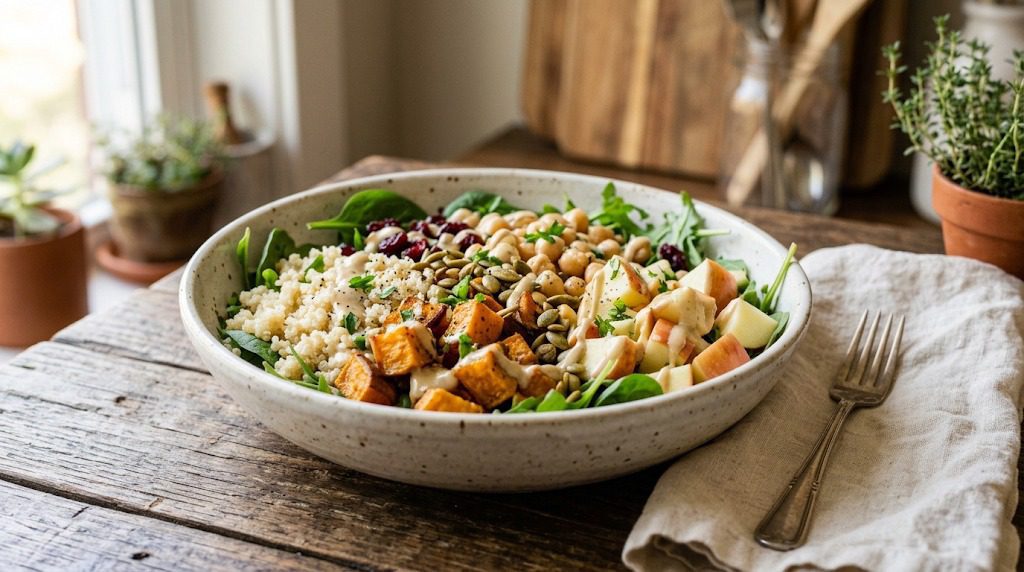
If you want a practical example of these ideas, this harvest-inspired bowl brings several satisfying ingredients together without requiring complicated cooking.
Quinoa provides a whole-grain-style base for the bowl, chickpeas add plant protein and fiber, and sweet potatoes contribute color and texture. Crisp apple brings a fresh, slightly sweet contrast, while the tahini dressing ties everything together.
It's a flexible lunch or dinner that you can adapt to whatever you have available.
.Ingredients
For the bowl:
- 1 cup cooked quinoa
- 1 cup cooked chickpeas, drained and rinsed if canned
- 1 medium sweet potato, diced
- 1 small apple, thinly sliced or chopped
- 1 to 2 cups fresh leafy greens
- 1 tablespoon pumpkin seeds
- A little vegetable broth or water, as needed for roasting
For the apple-tahini dressing:
- 2 tablespoons tahini
- 1 tablespoon lemon juice
- 1 to 2 tablespoons water, or enough to reach your preferred consistency
- 1 teaspoon maple syrup, optional
- A small pinch of salt, if desired
Instructions
- Prepare the sweet potato. Heat the oven to 400°F (200°C). Arrange the diced sweet potato on a lined baking tray. Add a small splash of vegetable broth or water to help prevent sticking, and roast until tender, about 20 to 30 minutes. Check periodically and add a little more liquid if needed.
- Prepare the quinoa and chickpeas. If they aren't already cooked, prepare them according to their package instructions. Drain and rinse canned chickpeas.
- Make the dressing. Whisk the tahini and lemon juice together. Add water gradually until smooth and pourable. Stir in the optional maple syrup and salt.
- Build the bowl. Divide the quinoa, chickpeas, roasted sweet potato, apple, and greens between serving bowls.
- Finish and serve. Drizzle with the apple-tahini dressing and sprinkle with pumpkin seeds.
Prep time: 10 minutes
Cook time: 20 to 30 minutes, depending on the sweet potato
Servings: 2
Make It Your Own
This recipe is designed to be flexible.
- Swap quinoa for brown rice or another grain you enjoy.
- Use roasted carrots or broccoli instead of sweet potato.
- Replace the apple with pear for a different seasonal flavor.
- Add extra chickpeas if you prefer a more substantial bowl.
- Use water to thin the tahini dressing until it reaches the consistency you like.
You can also roast the sweet potatoes and cook the quinoa ahead of time, making assembly easier on a busy day.
How to Make Satisfying Meals Easier Throughout the Week
You don't have to prepare a different recipe every day to eat satisfying meals.
A few flexible ingredients can become several different dishes.
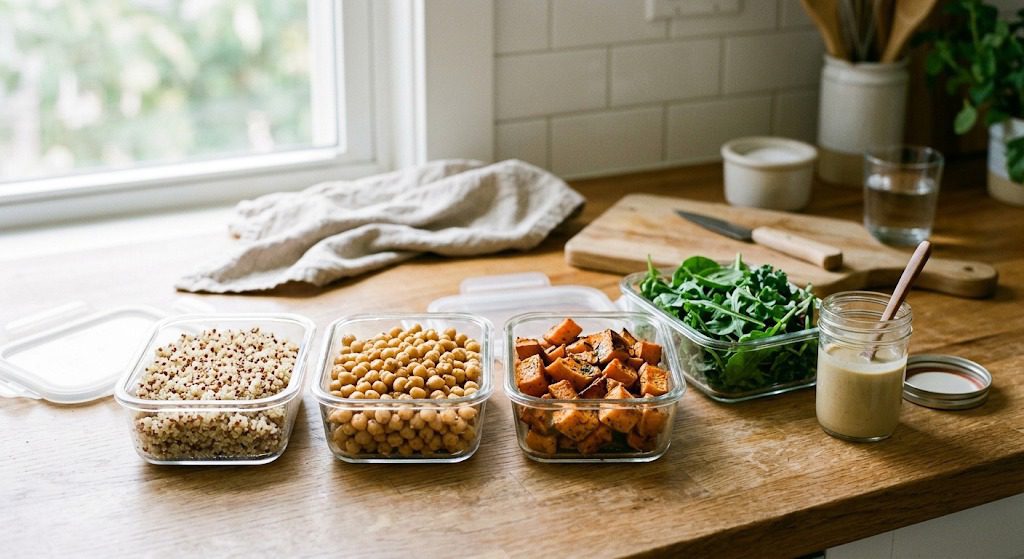
For example, cooked chickpeas can go into a grain bowl one day and a tomato curry another day. Quinoa can be served warm with vegetables or used as the base for a lunch salad. Roasted sweet potatoes can accompany dinner or be added to a wrap the next day.
Here are four simple ways to reduce the work:
Keep a Few Reliable Ingredients on Hand
Choose foods you genuinely enjoy and can use in more than one recipe. Chickpeas, lentils, grains, frozen vegetables, and tahini are useful starting points.
Prepare Components, Not a Whole Week of Meals
If making several complete meals in advance feels overwhelming, prepare just one or two components.
Cook a grain, roast a tray of vegetables, or prepare a dressing. You can combine them differently throughout the week.
Keep Convenience Foods in the Mix
Canned beans, frozen vegetables, prewashed greens, and ready-to-cook grains can make meals easier to assemble.
Convenience is not a failure. It's a useful tool when time and energy are limited.
Let Your Hunger Guide You
A meal doesn't have to follow a fixed formula to be right for you. Your appetite can vary from day to day.
If you're still hungry after eating, it's okay to have more food or a snack. The aim is to support your needs, not to follow rigid rules.
This Week's Challenge: Ask One Simple Question
For the next three days, pause before or during a meal and ask:
“What would make this meal more satisfying?”
You might decide to add chickpeas to a salad, serve vegetables with your rice, or include a dressing you enjoy.
You might also discover that your meal is already satisfying and doesn't need anything else.
There is no perfect answer. This is simply an opportunity to notice what works for you and make small adjustments when needed.
At the end of the three days, consider which additions were easiest to maintain and which meals you would happily make again.
Small, repeatable choices are often more useful than a complicated plan you struggle to follow.
A Quick Food Safety Reminder for Meal Prep
Preparing a few ingredients ahead of time can save effort during the week, but safe storage matters too.
- Refrigerate perishable cooked foods within two hours, or within one hour if the temperature is above 90°F (32°C).
- Store food in clean, shallow containers to help it cool quickly.
- Keep your refrigerator at 40°F (4°C) or below.
- Use refrigerated leftovers within three to four days, or freeze them for longer storage.
- Wash fresh produce under running water before preparing it.
These simple habits help you make the most of the food you've prepared while keeping meals safe to eat.
You Don't Need a Perfect Plate
Building satisfying meals isn't about getting every ingredient right or following a strict set of rules.
It's about learning what helps you feel nourished, satisfied, and ready to move through your day.
Sometimes that means adding beans to a familiar dish. Sometimes it means preparing a few ingredients in advance. And sometimes it means recognizing that you need more food.
Start with what you already enjoy. Make one small change, see how it works for you, and build from there.
That's a more practical way to approach everyday eating, especially when life is busy.
Don't Forget About Eating Out
Fall also brings a full calendar.
Work events.
Family gatherings.
Weekend activities.
Football games.
Dinners with friends.
Travel.
You won't always be eating the meal you planned at home, and that's okay.
A sustainable approach to eating has to work outside your kitchen too.
That's why You Can Eat Here is such a useful resource.
It was created to help you navigate restaurants, fast food, fine dining, different cuisines, travel, social occasions, and everyday situations where you want to make a satisfying choice without overthinking every ingredient.
Because seasonal eating shouldn't mean staying home all season.
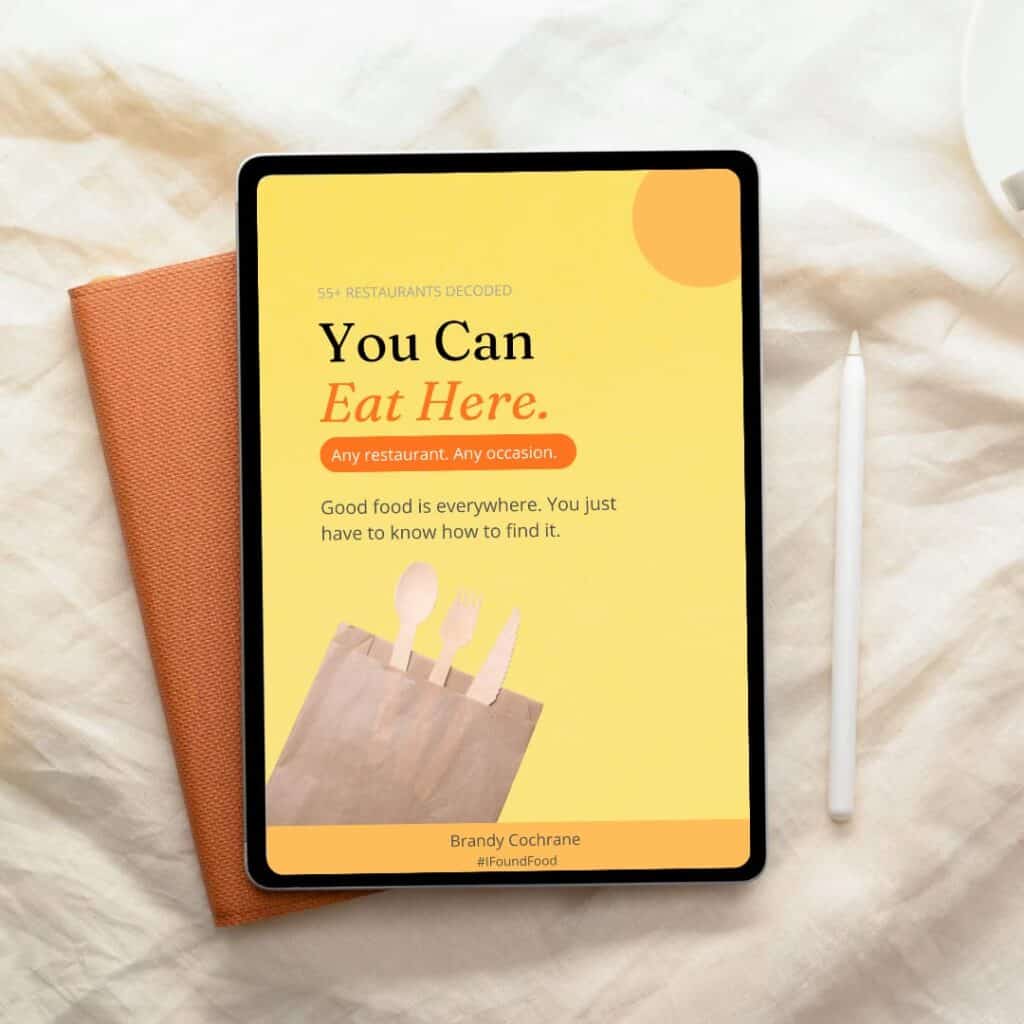
Your Guide to Finding Good Food Anywhere
Chef Brandy created You Can Eat Here to make eating out feel easier.
Whether you're travelling, working late, or spending the day out, you'll have practical guidance to help you eat well with confidence.
Click HERE to order your copy of You Can Eat Here today.
Want More Support with Everyday Eating?
If you want more practical ideas for making everyday eating feel less complicated, explore the 5-Day Sweet Escape Challenge. It's designed around simple recipes, short videos, and small daily actions you can work into your routine.
Join the Free 5-Day Sweet Escape Challenge HERE

If you're looking ahead to the holiday season, the 15-Day Holiday Sweet Escape runs November 4 –18, 2026, with daily guidance, recipes, practical tools, and extra support to navigate holiday sweetness with more balance.
Join the free 15-Day Holiday Sweet Escape
Because eating well should support your life, not make it harder.